AMHS advocacy – Meeting with the South Australian Health Minister
Minister of Health Meeting 12 August 2026
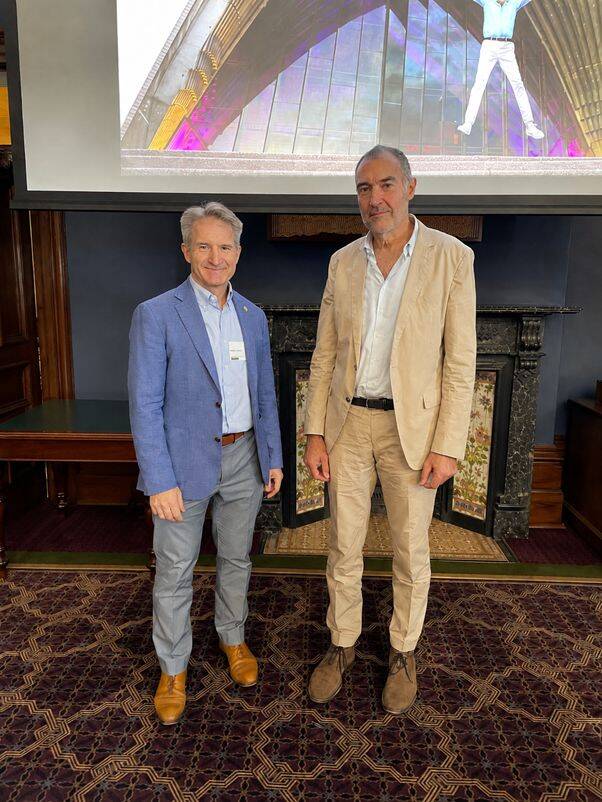
Retired ophthalmologist Dr James Muecke AM and clinical nutritionist Tim Jaeger met with South Australian Health Minister Blair Boyer on 12 August 2026.
The meeting was held at Preventive Health SA, a relatively new agency formed as Wellbeing SA by the Marshall government in 2019. It was later rebranded Preventive Health SA by the Malinauskas government in 2022.
The department’s legislative framework was finalised in November 2024 and Dr Muecke and I had the good fortune of passing an amendment to the legislation in December 2025, with the support of Sarah Game MLC. The amendments strengthened the conflict of interest statement and also introduced a critical ‘clinical translation and interpretation’ criterium for appointment of members to Preventive Health SA’s Governing Council. This Council is responsible for advising the Health Minister on all areas of preventative health.
In the meeting we had the opportunity to discuss preventative health policy and action as it relates to chronic disease, focusing on metabolic dysfunction such as insulin resistance, prediabetes, and type 2 diabetes. In a foundational sense metabolic dysfunction is a major risk factor to the leading causes of death in Australia, that of heart attack, dementia, stroke, and cancer.
Our primary objectives during the meeting were to urge the South Australian government to:
- Shift its preventative health strategy towards greater clinical interventions and
- Provide nutritional education programs that included Therapeutic Carbohydrate Reduction for people with metabolic disease for medical and dietetic students and practising professionals.
South Australians have seen recent awareness campaigns such as the government’s ‘Toxic Fat’ campaign as well as other arguably more ancillary strategies such as the banning of junk food advertising on public transport.
The two key clinical areas we asked the government to focus on were:
- Early screening – Introduction of point of care fasting blood insulin testing along with other early screening tests such as triglyceride to HDL ratio, hs-CRP and even urate as markers of metabolic dysfunction. As we know, there is a long wait for blood glucose to reach a pathological level, therefore it makes sense to screen and intervene at an earlier time, likely 10 or more years before the person is formally diagnosed with type 2 diabetes. GPs or even pharmacies could cost effectively supply this service.
- More clinical therapy – South Australia has a relatively small clinical program called the ‘Better Health Coaching Service’, https://betterhealth.sa.gov.au/, currently for people with a BMI of 27 or above. While being ‘standard of care’ it has shown significant improvement in a variety of metrics. There is however ample scope for optimisation using the principles of Therapeutic Carbohydrate Reduction. There is an opportunity for greater funding of this type of initiative and to also broaden the professions used as ‘health coaches’ from dietetics, exercise physiology and psychology to include professions such as clinical nutrition.
We touched on the Australian Dietary Guidelines and the review currently being undertaken. We stressed that the guidelines have not been written for people with metabolic dysfunction (the majority of Australians) and therefore should not be used as a fall-back position for healthy eating strategies in anyone with pre or chronic disease. Too often we hear the unjustified vilification of healthy animal protein and its incidental saturated fat.
Lastly, we requested greater ‘clinical translation and interpretation’ representation on Preventive Health SA’s Governing Council. There is arguably a lack of clinical expertise in chronic disease prevention and certainly a lack of metabolic health expertise. The Minister invited formal nominations for these positions including that of clinical nutritionists and specialized GPs so that they may be considered for further Council member positions.
Notes: 2022 and 2024 restructure saw the bringing together areas such as tobacco and vaping, obesity prevention, mental health, suicide prevention, alcohol and other drugs, and broader determinants of health under one independent agency.
When Wellbeing SA was established in January 2020, its remit was quite broad. It was designed as the Marshall Government’s agency for shifting South Australia from a system dominated by hospital treatment toward one that put much more weight on prevention, early intervention and community-based care. The government’s 2020 Health and Wellbeing Strategy explicitly said Wellbeing SA was to lead community-based health and prevention services and help prevent avoidable hospital admissions.
Its inaugural Wellbeing SA Strategic Plan 2020–2025 organised the work around three major priority areas:
- The early years — particularly pregnancy, infancy and childhood, with an emphasis on the first 1,000 days and giving children a healthier start to life.
- Mental health, wellbeing and suicide prevention — population mental health promotion, early intervention, community wellbeing and suicide prevention, rather than simply running psychiatric hospitals. During 2020–21, community/population suicide-prevention responsibilities were transferred into Wellbeing SA.
- Chronic disease, integrated care and injury prevention — preventing diseases such as diabetes, cardiovascular and respiratory disease; tackling obesity, inactivity and poor nutrition; reducing preventable injury; and keeping people with chronic illness out of hospital where possible.
A very important part of the original model was therefore integrated care. Wellbeing SA was supposed to bridge that awkward gulf between a person’s GP/community care and the hospital system. Plans included community and ambulatory models for diabetes, respiratory disease, care of older people, childhood development and obesity, along with alternative pathways designed to avoid unnecessary emergency-department visits and hospital admissions.
What did that look like in practice?
Some of its early work and initiatives included:
Open Your World — launched during the COVID-19 period as a statewide wellbeing initiative. It promoted mental wellbeing, physical activity, healthy eating, social connection and activities people could undertake while restrictions were in place. Wellbeing SA was closely involved in the strategy and associated resources.
Healthy Parks Healthy People SA — Wellbeing SA worked with the environment portfolio to encourage South Australians to use parks, green spaces and nature for physical activity, mental wellbeing and childhood development. The refreshed 2021–2026 framework covered physical activity in nature, mental-health benefits, Aboriginal connections to Country, childhood development, green infrastructure and health impacts of climate change.
Adelaide 100 — Wellbeing SA and the Office for Recreation, Sport and Racing funded Walking SA’s project to develop a roughly 100-km walking circuit through Adelaide and its suburbs, launched in October 2020. It was part of the push to make ordinary physical activity easier rather than relying solely on clinical intervention.
Health promotion and chronic-disease prevention — this included work around healthy weight, nutrition, physical activity, screening, early intervention and reducing chronic-disease risk factors. The broader policy specifically called for an integrated response to overweight and obesity.
Population health monitoring and evidence — Wellbeing SA gathered and used population-health information to work out which communities had poorer outcomes and where preventive investment was most needed. Evidence-informed action was one of the four strategic enablers in its original plan, alongside community participation, partnerships and investment.
Cross-government prevention — it wasn’t intended to operate as a little island inside SA Health. Part of the idea was to work with local councils, environment, education, recreation, NGOs, GPs and other government agencies, recognising that things like housing, parks, education, food environments and social conditions affect health.
There is also an important distinction between original Wellbeing SA and today’s Preventive Health SA.
Wellbeing SA’s original centre of gravity was:
early years + mental wellbeing/suicide prevention + chronic disease/injury prevention + integrated/community care.
Preventive Health SA, formed in February 2024, consolidated a wider range of prevention functions into one agency, including tobacco and vaping, alcohol and other drugs, obesity prevention, mental health and suicide prevention, determinants of health and Aboriginal health/health equity.
So it would be slightly misleading to imagine that 2020 Wellbeing SA was simply today’s Preventive Health SA under an old name. The lineage is there, but the machinery and remit were reorganised substantially.
And, rather interestingly, the original Marshall-era Wellbeing SA had a stronger “integrated healthcare/community care” flavour than the current agency’s more concentrated preventive-health remit. It wasn’t merely running public-awareness campaigns; part of its original purpose was structural reform of how South Australians moved between prevention → GP/community care → hospital care.